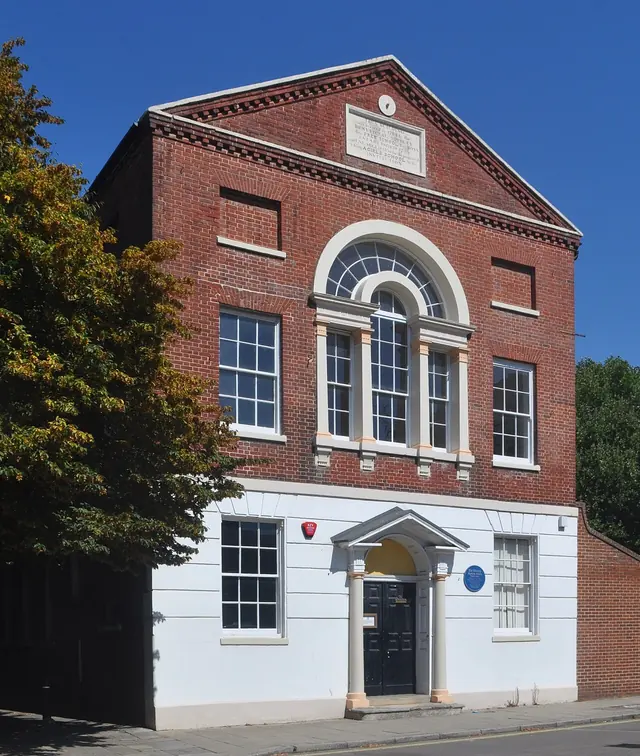
Charles Dickens was born in Landport, Portsmouth, on 7 February 1812. Portsea tradition says his mother Elizabeth was at a ball at the Beneficial Society's hall at 42 Kent Street the night before, and went into labour there. No record from the time has been found that proves it, so we tell it as a story.
What is the story?
The story goes like this. On the evening of 6 February 1812 a ball was held in Portsea. Among the guests were John Dickens, who worked at the Navy Pay Office, and his wife Elizabeth, who was heavily pregnant. During the evening Elizabeth went into labour. She was taken home by carriage to Mile End Terrace in Landport, and the next day she gave birth to a son. They named him Charles.
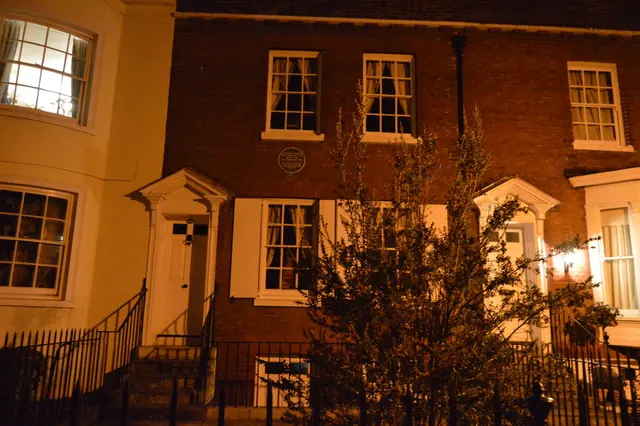
It is said that the ball was held here, in the hall of the Beneficial Society's school on Kent Street.
What do we know for certain?
Charles Dickens was born in Landport, Portsmouth, on 7 February 1812. The house where he was born still stands. It has been owned by the city since 1904 and is now the Charles Dickens Birthplace Museum.
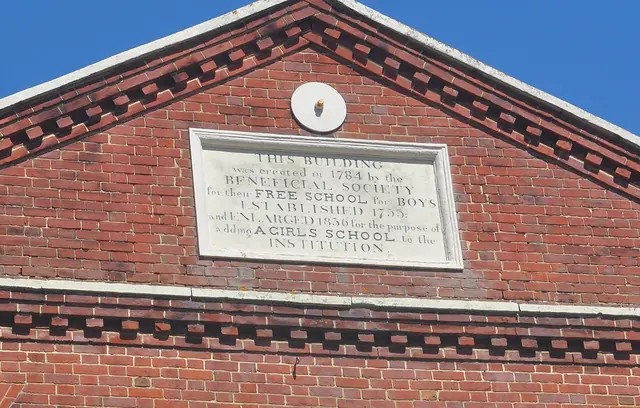
The building at 42 Kent Street was certainly standing that night. The stone tablet on its front records that it was put up in 1784, so by 1812 it had been part of Portsea for 28 years.
What can we not prove?
We have not found a newspaper notice, a letter or a diary from 1812 that places the ball in this building, or that places Elizabeth Dickens at it. The story is repeated by people who have run the building and by Portsmouth writers, but none of the versions we have read names a source from the time.
That does not make it false. It makes it a tradition, and we would rather say so than dress it up. If you know of a record that settles it either way, we would love to see it.
Has there been a ball here since?
Yes. On 6 February 2012, two hundred years to the night, a ball was held in this building to mark the bicentenary. Guests came in period costume. The Portsmouth writer Matt Wingett was there and wrote about it.
We like the idea that the best nights out in Portsea have a habit of happening upstairs at number 42. Read the full history of the Old Beneficial School, or meet the schoolboy who gave his name to Ayers Rock.