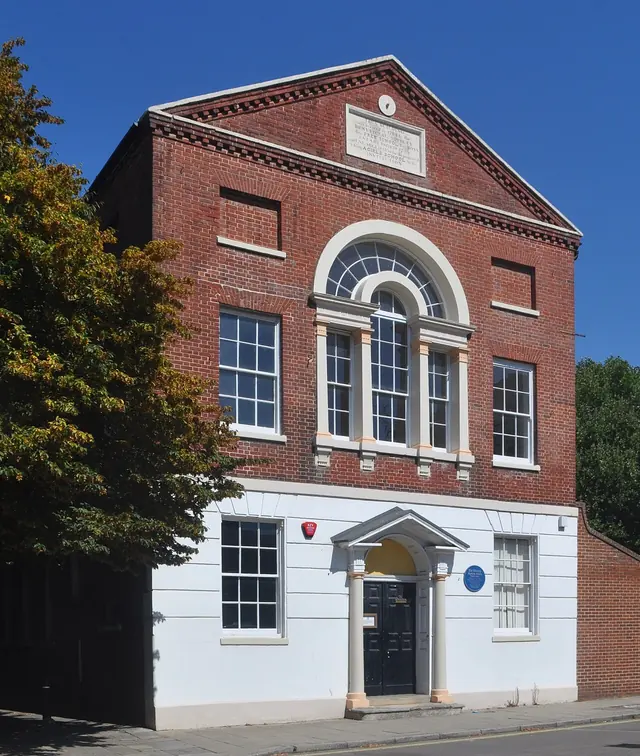
The Portsea Beneficial Society was a friendly society formed in 1755. It gave help in times of sickness and with funerals. The Society also ran a free school for poor boys, built 42 Kent Street for it in 1784, and added a girls' school in 1836. The Beneficiary takes its name from them.
What did the Beneficial Society do?
The Society was formed in Portsea in 1755. It was a friendly society, which in the 1700s meant a club that working people paid into so that there was money to fall back on. The Portsea Society gave help in times of sickness and with funerals.
It also did something less usual. It ran a school for the children of the poor, and it did not charge them.
How old is the school?
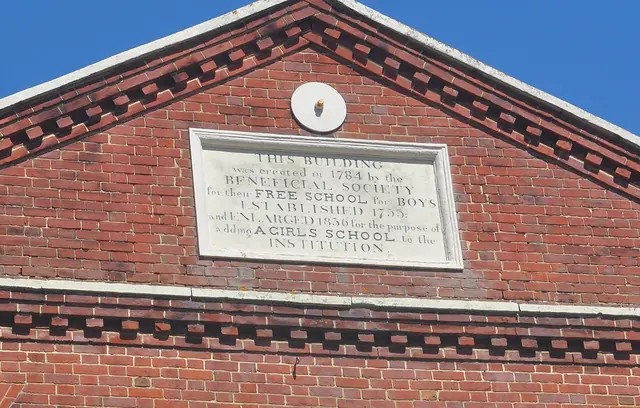
The tablet on the front of the building says the free school for boys was established in 1755. The Victoria County History of Hampshire dates it from a deed of 1754, and calls it the oldest foundation among more than forty elementary schools in the borough of Portsmouth.
About thirty years after the school began, the Society put up this building for it. The year was 1784.
Who paid for it?
Local people left money to the school in their wills, and the records of those gifts survive.
- Edward Crafts made a will in 1780 leaving money to educate poor boys. In 1782 his charity was attached to the schools in Kent Street. It came to £1,000 in government stock.
- Richard Wilmot left money in 1805 so that boys could be taught "the English language, writing, accounts, and navigation", with prizes for the best of them. Navigation was a practical subject in a dockyard town.
- Major Ebenezer Vavasour left £100 to the schools in 1808.
- John Ring added £50 in a will proved in 1839.
When were girls admitted?
In 1836 the building was enlarged "for the purpose of adding a Girls School to the Institution", in the words of the tablet. You can still see the join. The long west side of the building has 22 bays of windows, and only the 7 nearest the street belong to the school of 1784.
Why does the name matter now?
A beneficiary is someone who receives a benefit. For nearly two centuries the children of Portsea were the beneficiaries of this building. We chose the name so that the Society that built it is remembered every time someone buys a ticket.
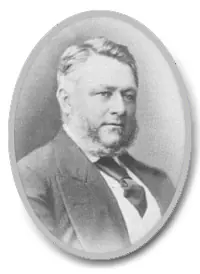
One of those children went a very long way. Read about Henry Ayers and Ayers Rock, or learn how to read the front of the building.